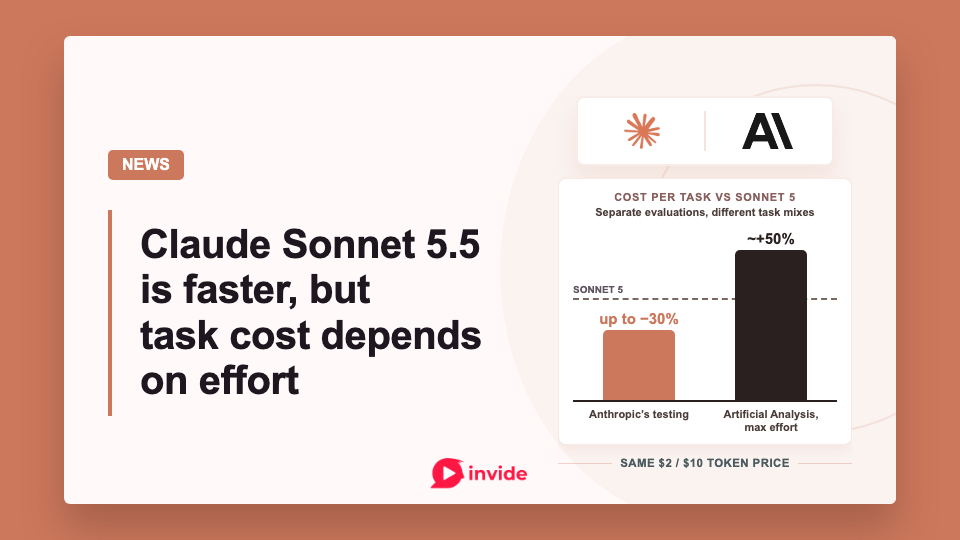
Claude Sonnet 5.5 is faster, but task cost depends on effort
Anthropic claims up to 30% lower cost per task. Artificial Analysis measured $7.60 per task at max effort, about 50% above Sonnet 5. Two request settings that worked with Sonnet 5 now return 400 errors.
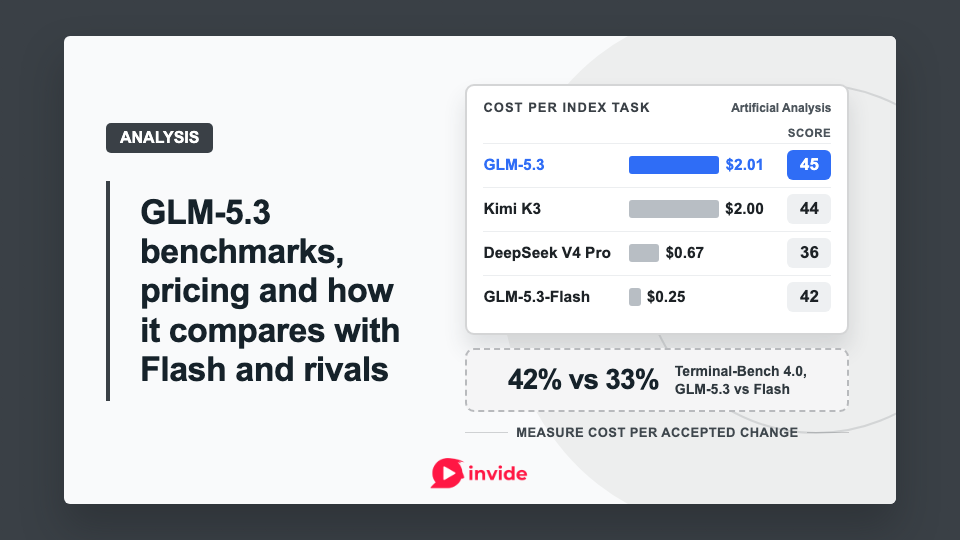
GLM-5.3 benchmarks, pricing and how it compares with Flash and rivals
GLM-5.3 keeps GLM-5.2's list price and matches Kimi K3's cost per Artificial Analysis index task. DeepSeek V4 Pro costs a third as much on the same index. Existing users must update requests that disable thinking.
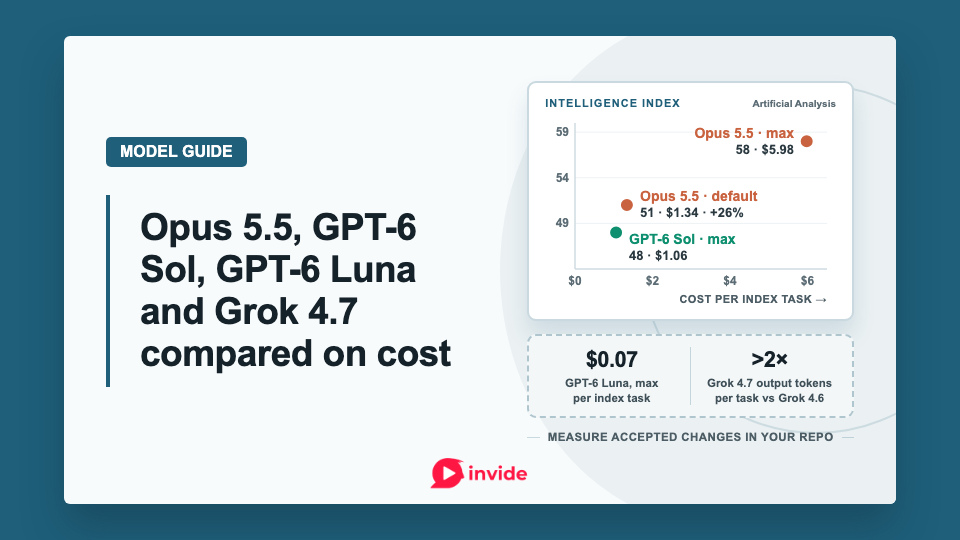
Opus 5.5, GPT-6 Sol, GPT-6 Luna and Grok 4.7 compared on cost
Opus 5.5's lower rates left max-effort task cost roughly level with Opus 5 in one independent test. Sol and Luna roughly halved their cost per task, while Grok 4.7 used more than twice the output tokens at unchanged rates.
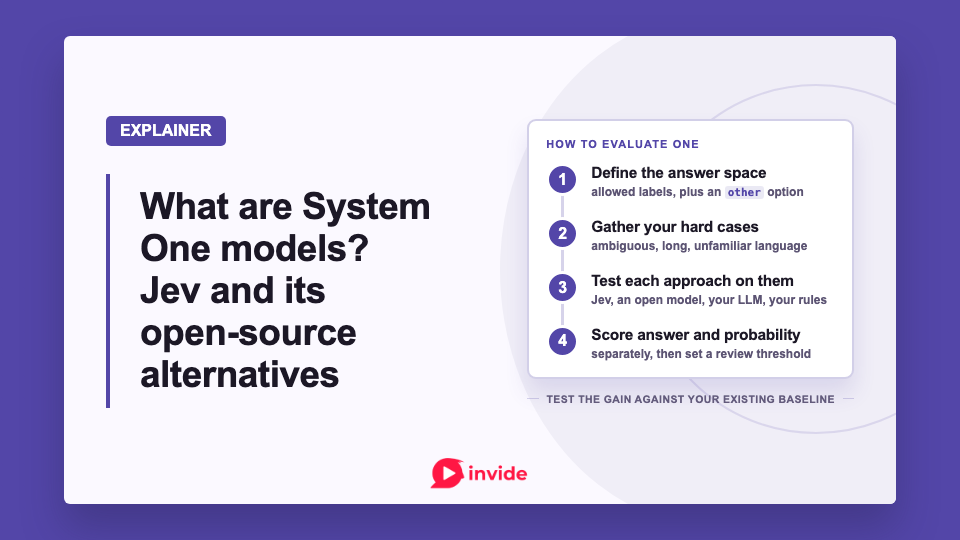
What are System One models? Jev and its open-source alternatives
TypeSafe's Jev returns typed answers and probabilities instead of text. Laya, Nimble, Kev and OpenThai now offer open versions of the same idea. This guide covers how they work, their limits and test results, and when a plain classifier is the simpler option.
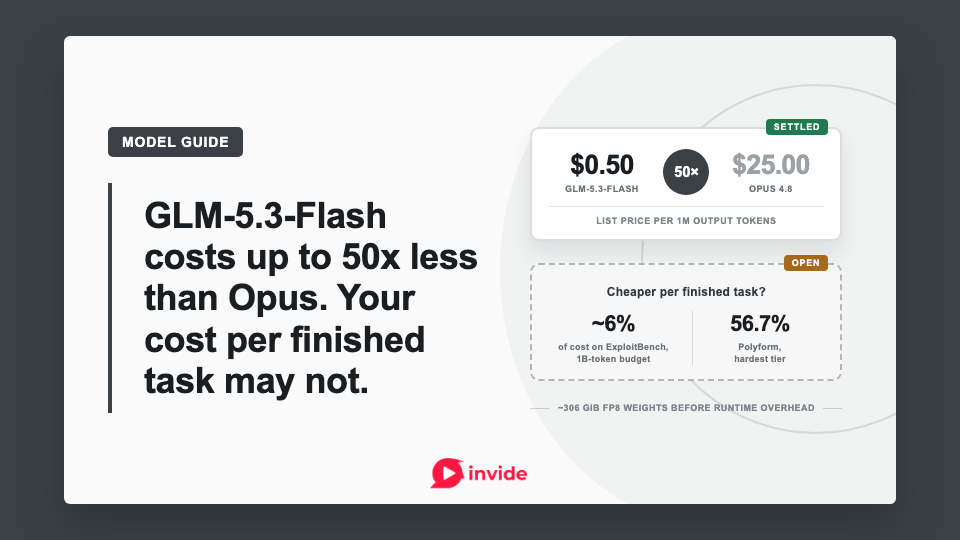
GLM-5.3-Flash costs up to 50x less than Opus. Your cost per finished task may not.
Given a billion tokens per vulnerability, GLM-5.3-Flash matched Claude Mythos Preview on ExploitBench at roughly 6% of the cost, while one production team found it fine for bounded work and not ready for their hardest tier.
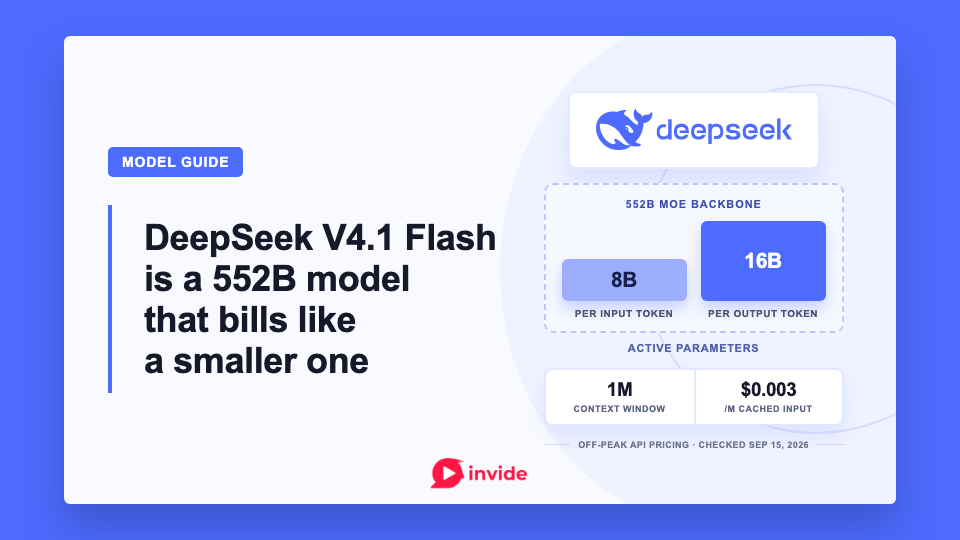
DeepSeek V4.1 Flash is a 552B model that bills like a smaller one
DeepSeek V4.1 Flash activates 8B parameters per input token and prices cached input from $0.003 per million. On Terminal-Bench 4.0, it scores 31.2 to Opus 5.0's 51.8.
Shopify is leaving React Native after agents changed its cost model
Shopify rebuilt Shop in 12 weeks, backed by native specialists and strict parity checks. Maintaining two apps remains part of the bet.
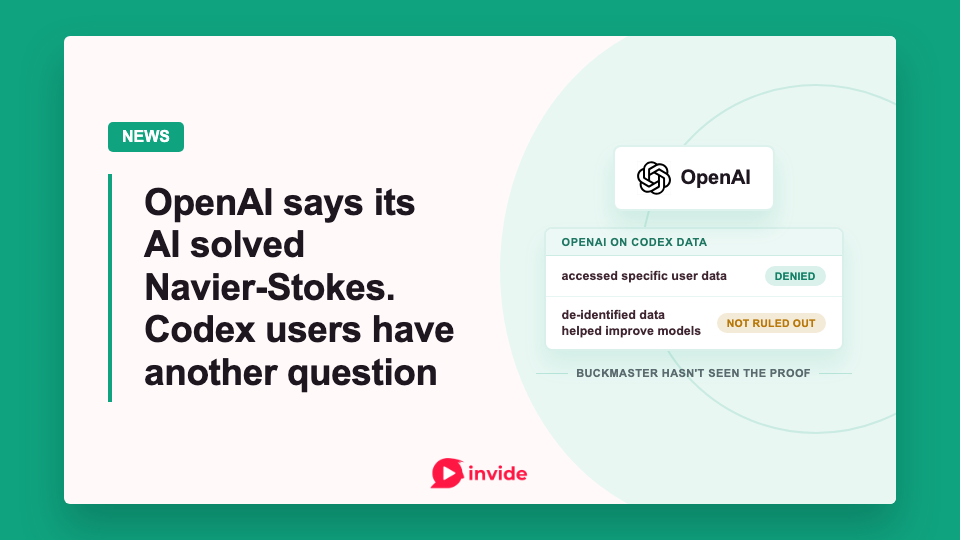
OpenAI says its AI solved Navier-Stokes. Codex users have another question
Navier-Stokes, a Millennium Prize problem in fluid dynamics, is still listed as unsolved. OpenAI denies accessing any specific user data but cannot rule out de-identified data from the researchers' Codex use improving its models.
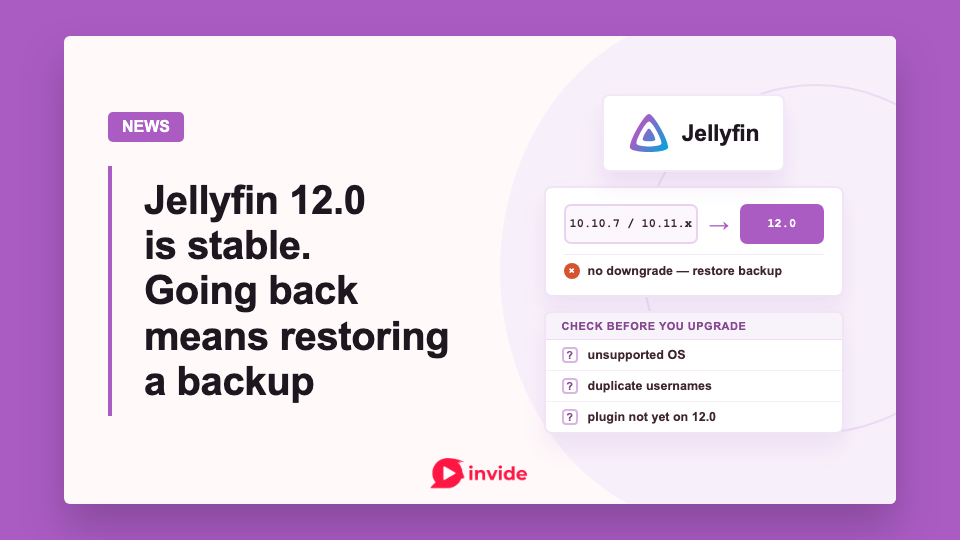
Jellyfin 12.0 is stable. Going back means restoring a backup
The release rewrites data on first boot, requires a full library scan, and leaves third-party plugins waiting for compatible builds from their maintainers.
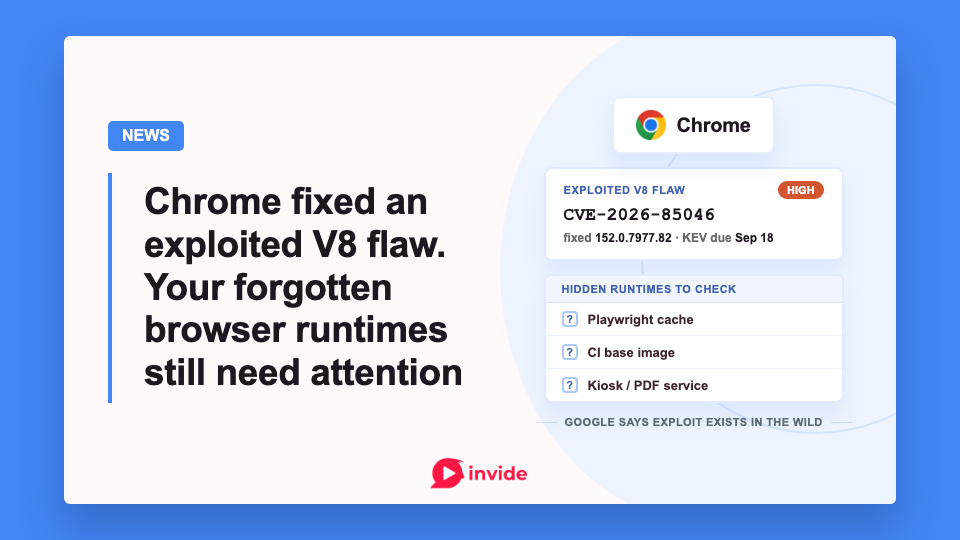
Chrome fixed an exploited V8 flaw. Your forgotten browser runtimes still need attention
CVE-2026-85046 is fixed in Chrome 152.0.7977.82, and CISA wants it patched by September 18. Playwright caches, CI base images, PDF services, and kiosk builds each need their own version check.