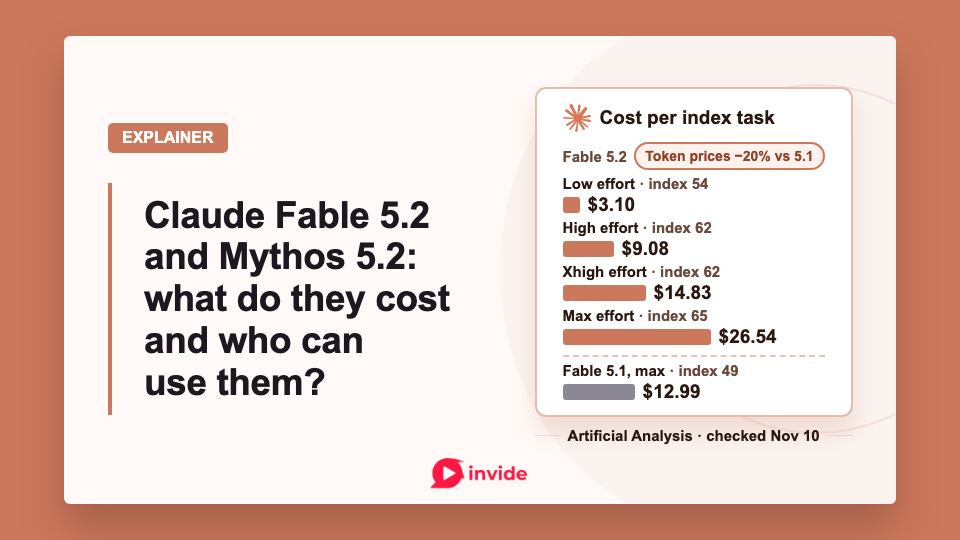
Claude Fable 5.2 and Mythos 5.2: what do they cost and who can use them?
Token prices fell 20%, but max-effort runs cost twice as much per task on one independent index, while low effort scored above Opus 5.5 high for less. Plans, Mythos access and the API changes that can break existing agents.
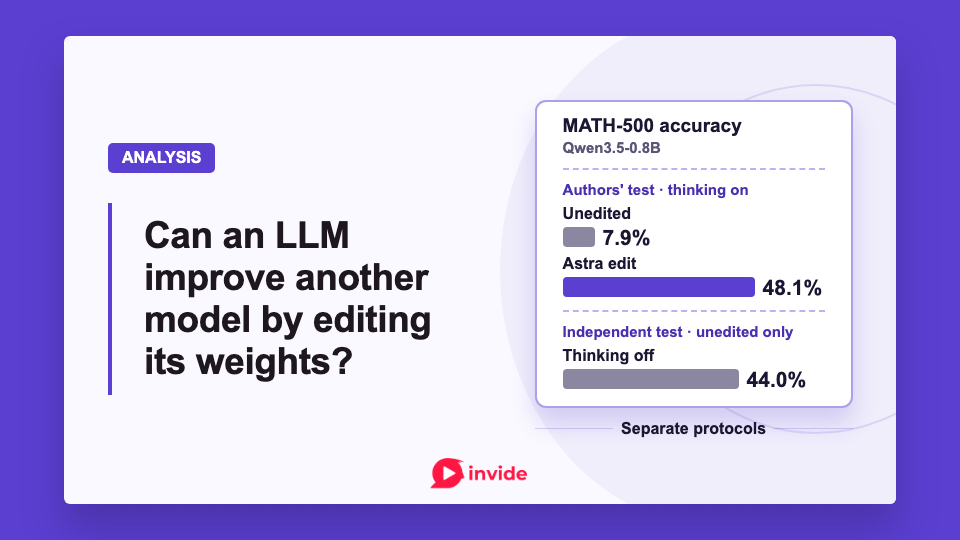
Can an LLM improve another model by editing its weights?
A reported math-score jump from 7.9% to 48.1% came from fixing repetitive reasoning. An independent Claude Opus 5.5 run found another repair, while stronger unedited baselines challenge the size of the gain.
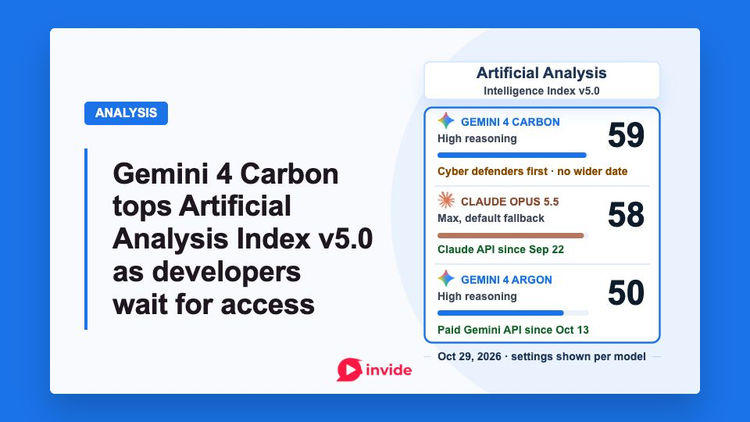
Gemini 4 Carbon tops Artificial Analysis Index v5.0 as developers wait for access
Argon's introductory pricing ends November 30. Use its paid API to build an evaluation now, then compare Carbon on the same tasks when access expands.
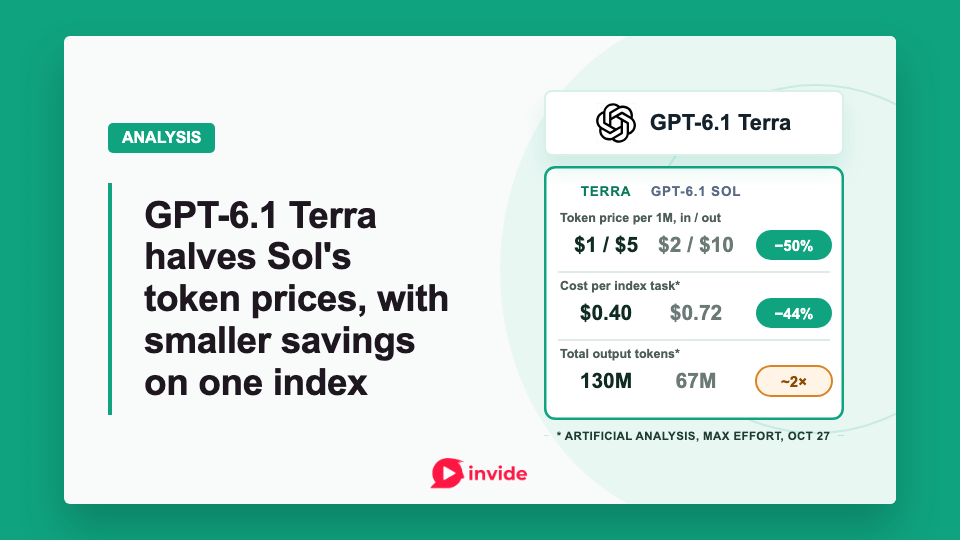
GPT-6.1 Terra halves Sol's token prices, with smaller savings on one index
Terra targets work across documents and apps. Its cost depends on request size and reasoning effort, plus the work needed to check and repair the result.
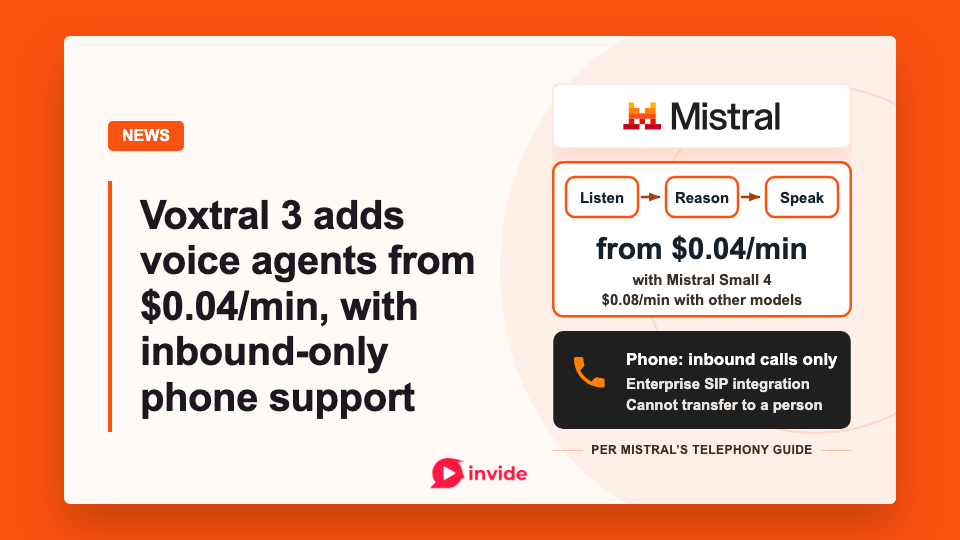
Voxtral 3 adds voice agents from $0.04/min, with inbound-only phone support
Mistral claims sub-second replies. Its own tests show a speed-accuracy tradeoff: transcription errors rise as streaming delays shrink. Voxtral 2 integrations also lose word timestamps.
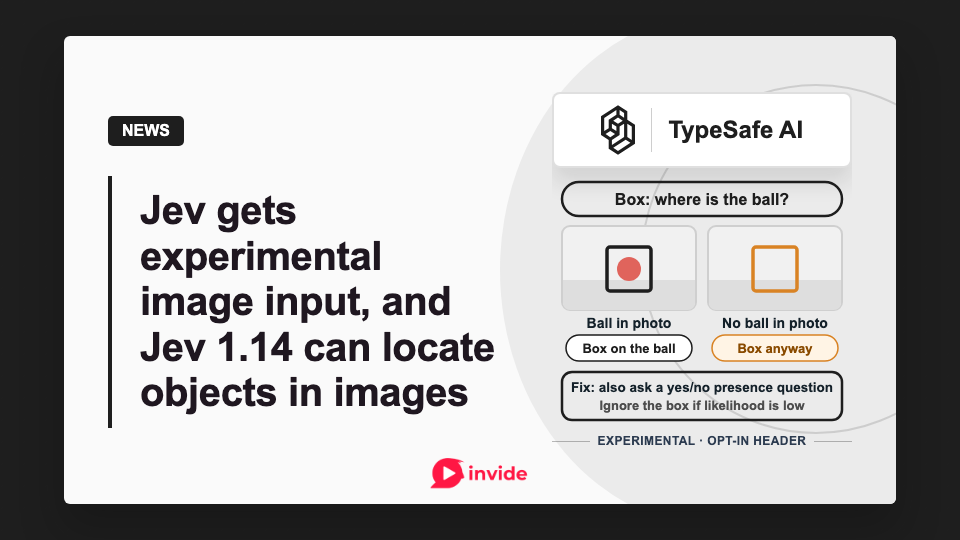
Jev gets experimental image input, and Jev 1.14 can locate objects in images
Ask Jev 1.14 where something is in a photo and it returns a box around it. If the thing isn't in the photo, it still returns a box, so apps should also ask whether it's there.
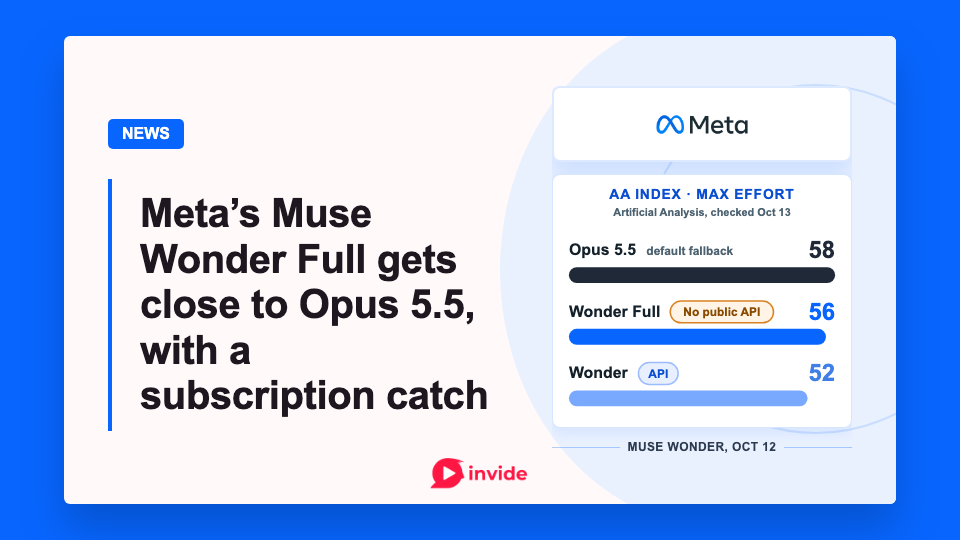
Meta's Muse Wonder Full gets close to Opus 5.5, with a subscription catch
Regular Muse Wonder costs the same $4/$20 per million input/output tokens as Opus 5.5, while scoring six points lower on an independent index. Its measured cost per benchmark task is lower, and Meta says it has fixed unusually fast quota usage on Muse Code.
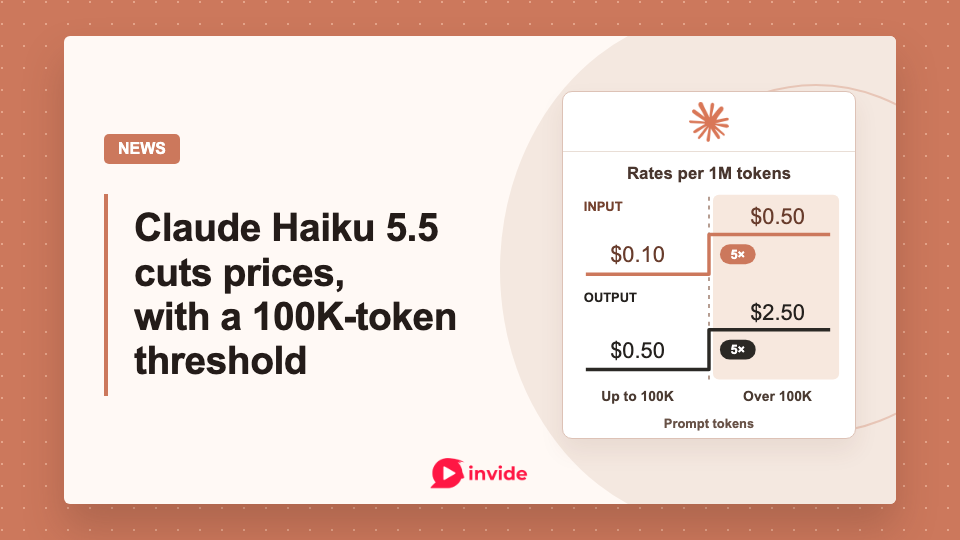
Claude Haiku 5.5 cuts prices, with a 100K-token threshold
Input pricing starts at $0.10 per million tokens. A short answer to a prompt over 100K tokens pays $2.50 per million output tokens. Cache rates also rise fivefold above the threshold.
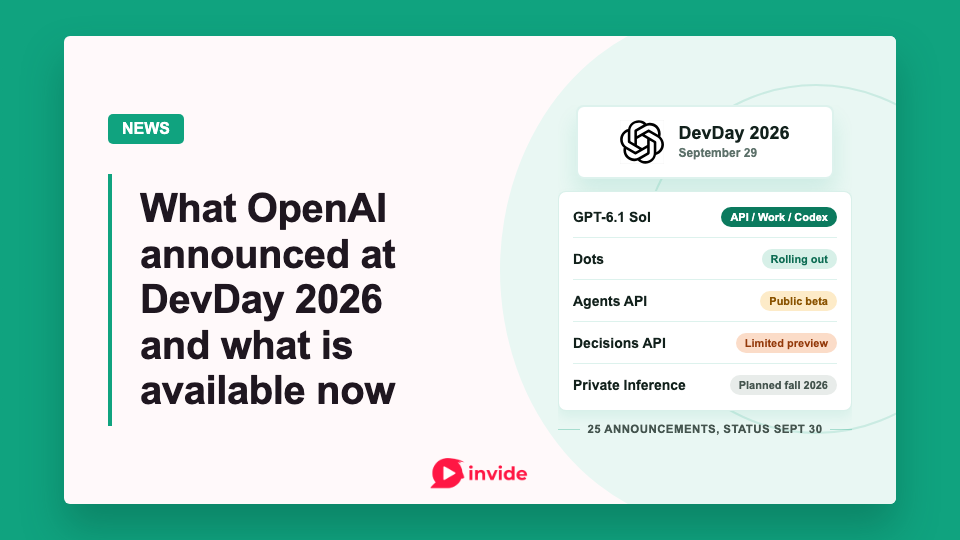
What OpenAI announced at DevDay 2026 and what is available now
OpenAI's tests put GPT-6.1 Sol near Astra on coding and computer use at GPT-6 Sol's prices of $2 per million input tokens and $10 per million output tokens. Dots bring a cloud computer to eligible Pro and Business Premium users, while Agents API computer use is in public beta.
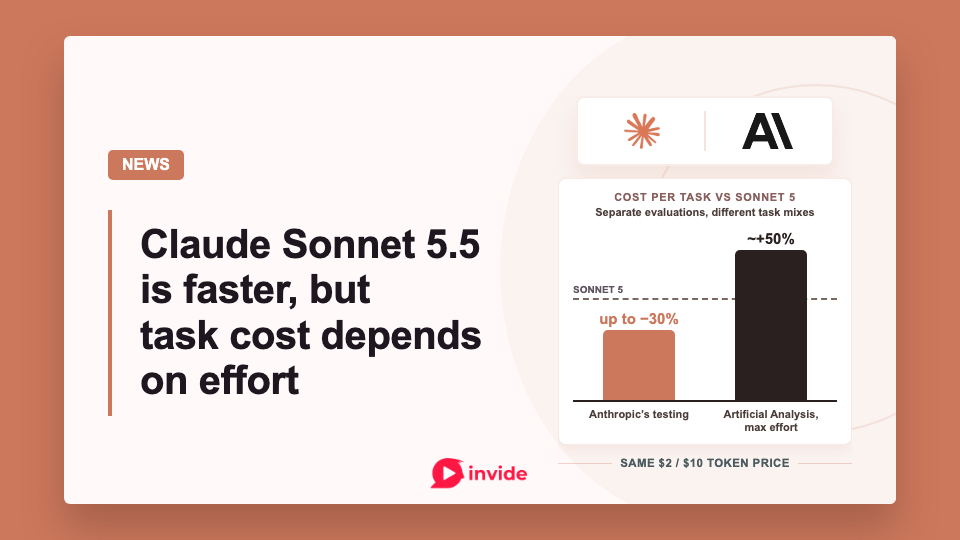
Claude Sonnet 5.5 is faster, but task cost depends on effort
Anthropic claims up to 30% lower cost per task. Artificial Analysis measured $7.60 per task at max effort, about 50% above Sonnet 5. Two request settings that worked with Sonnet 5 now return 400 errors.